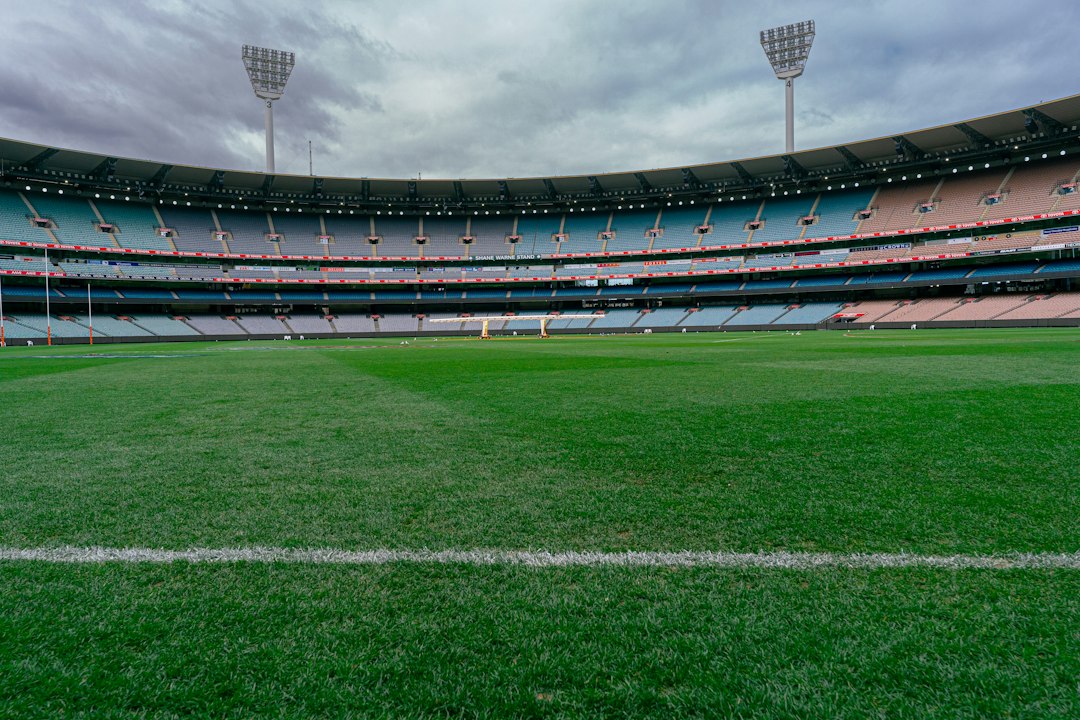
International breaks divide football opinion sharply. Supporters of smaller clubs dread them. Managers of title contenders eye the fixture list nervously. Analysts track the results that follow with genuine curiosity. The question of whether clubs perform differently after their squads scatter across the globe and then reassemble has generated real data over many seasons, and the patterns that emerge tell a coherent story about squad management, travel fatigue, and rhythm disruption.
Table of Contents
Why International Breaks Create Unusual Conditions
Club football operates on a carefully managed weekly rhythm. Training sessions, tactical preparation, rest protocols, and match-day routines are all calibrated to a continuous schedule. When an international break arrives, that rhythm is broken in a very specific way.
Players travel to national team camps, often crossing several time zones. Some compete in two or three competitive matches in roughly ten days. Others, particularly those whose national teams did not qualify for major tournaments or who were not selected, stay at their clubs and train in reduced groups. The result is a squad that reassembles in fragments, with players returning on different days, carrying different levels of fatigue and, in some cases, minor knocks sustained in international duty.
The 2022-23 Premier League season illustrated this clearly. Across the three main international breaks that season, the average number of goals scored per game in the first round of fixtures after a break was slightly lower than the seasonal average. That is a small signal, but it is consistent with what analysts have observed across multiple leagues: matches immediately after breaks tend to be tighter and less expansive in the early stages, as teams take longer to find cohesion.
What the Data From European Leagues Shows
Several analysts and football data platforms have examined post-break performance across Europe’s major leagues over five-to-ten-year windows. The findings tend to cluster around a few consistent themes.
Home advantage becomes more pronounced after international breaks. Across La Liga, the Bundesliga, and the Premier League, home sides have historically recorded slightly higher win rates in the round immediately following a break compared to the seasonal average. One reason suggested for this is that home clubs endure less disruptive travel than visiting sides, whose squad members may have returned from farther destinations with less recovery time.
Newly promoted clubs and smaller squads tend to suffer more. A club with 18 or 19 senior players finds it harder to absorb the disruption of losing six or seven players to international duty than a club with a squad of 25 or 26. When those players return late, or return carrying fatigue from two competitive international fixtures, the squad imbalance is more severe.
Goal tallies in the first post-break weekend have shown a modest but recurring dip in several seasons. In the Bundesliga between 2018 and 2023, the average goals per game in the first post-break round sat marginally below the full-season average in four of the five seasons studied. The pattern is not dramatic, but it appears repeatedly enough to be worth noting.
The Role of Individual Player Returns
The specific players who return late — or not at all due to injury — shape results more than the general principle of a break. When a central striker returns two days before a match after playing 180 minutes of World Cup qualifying football in South America, their availability in name and their actual physical readiness are very different things. Managers often start those players, out of necessity or rotation pressure, and the performances can reflect the residual fatigue.
Injury data collected by organisations like the CIES Football Observatory and UEFA’s own medical committees has consistently shown a small spike in soft-tissue injuries in the weeks immediately following international breaks. This is attributed partly to players returning to different training loads and partly to the disruption of personalised conditioning programmes that clubs run across a full season.
Which Types of Clubs Are Most Affected
Not all clubs experience post-break disruption equally. The pattern splits roughly along squad depth and international representation lines.
Clubs in the top four or five of their domestic league typically send eight to fourteen players to international duty. That is a significant portion of a first-choice squad. However, these clubs also have the depth to absorb absences and the resources to manage player return protocols carefully. They often struggle slightly, but their quality cushions the impact.
Mid-table clubs with limited squads and three or four international players can actually benefit from the break. Those players who remain at the club get additional training time, cohesion work, and rest. If the returning internationals are genuinely fit, the club can be sharper for a break rather than blunted by it.
Clubs fighting relegation present a more complicated picture. If their most important players are not in national squads, the break gives the manager time to work on structure and organisation. Several clubs in Premier League history have used international breaks as a turning point, returning to league action with improved defensive organisation or a tactical adjustment that had been difficult to implement mid-season.
Long Breaks Versus Short Windows
Not all international breaks are equivalent. A short October window that takes two weeks out of the domestic schedule produces different effects than the long break before a major tournament. The extended breaks before the 2018 and 2022 World Cups created unusual conditions in domestic leagues immediately upon restart.
After the 2022 World Cup, when club football resumed in late December and January, teams showed varied responses. Some clubs whose players had gone deep into the tournament — reaching the quarter-finals or semi-finals — struggled noticeably in January, with players visibly carrying fatigue across multiple matches. Others, whose players had returned from early exits with six or seven weeks of club preparation behind them, looked sharper and more cohesive.
The lesson the data suggests is that the length of the break and the depth of participation for each club’s key players matter considerably more than the existence of a break itself.
Tactical Patterns After Breaks
Tactically, post-break matches often show higher numbers of clearances and direct passes in the first twenty to thirty minutes. This is consistent with teams that have had less time to practise intricate combinations and are relying more heavily on structured defensive shape while they reestablish match rhythm. As matches progress beyond the half-hour mark, play tends to open up closer to seasonal patterns.
This is not universal. Managers who use the break to focus intensively on a specific tactical problem sometimes emerge from it with a noticeable improvement in a particular area, whether that is set-piece organisation, pressing triggers, or wide defensive positioning.
Frequently Asked Questions
Do home teams generally perform better in matches after an international break?
Data across several European leagues over multiple seasons suggests home sides do record slightly higher win rates in the first post-break round. This is linked to home squads experiencing less disruptive travel during the break period compared to visiting sides whose players may return from further distances.
Are there more injuries after international breaks?
Medical research compiled by UEFA and independent football data organisations shows a modest increase in soft-tissue injuries in the two to three weeks following international breaks. This is attributed to disruptions in personalised conditioning schedules and the transition between different training environments.
How does squad size influence a club’s post-break performance?
Clubs with smaller squads tend to feel the disruption more keenly. When five or six players are on international duty and return at different times with different fatigue levels, a squad of eighteen finds it harder to absorb that than a squad of twenty-five. Depth provides a buffer that smaller clubs simply do not have.
Does the duration of the international break change how teams perform on return?
Yes, significantly. Short two-week windows have a relatively contained effect. Extended breaks, such as those surrounding major tournaments, create a wider spectrum of outcomes depending on how far each club’s players progressed in the competition. Players returning from deep tournament runs show more noticeable fatigue effects across subsequent club matches.
Predictions are opinions based on analysis, and no result is guaranteed. This website is for adults aged 18+ and is for information and entertainment only.
See the daily football predictions on the homepage.